
Christ as Carpenter: The Blue-Collar Blindspot, Why does it matter?
The Significance of Jesus's Vocation
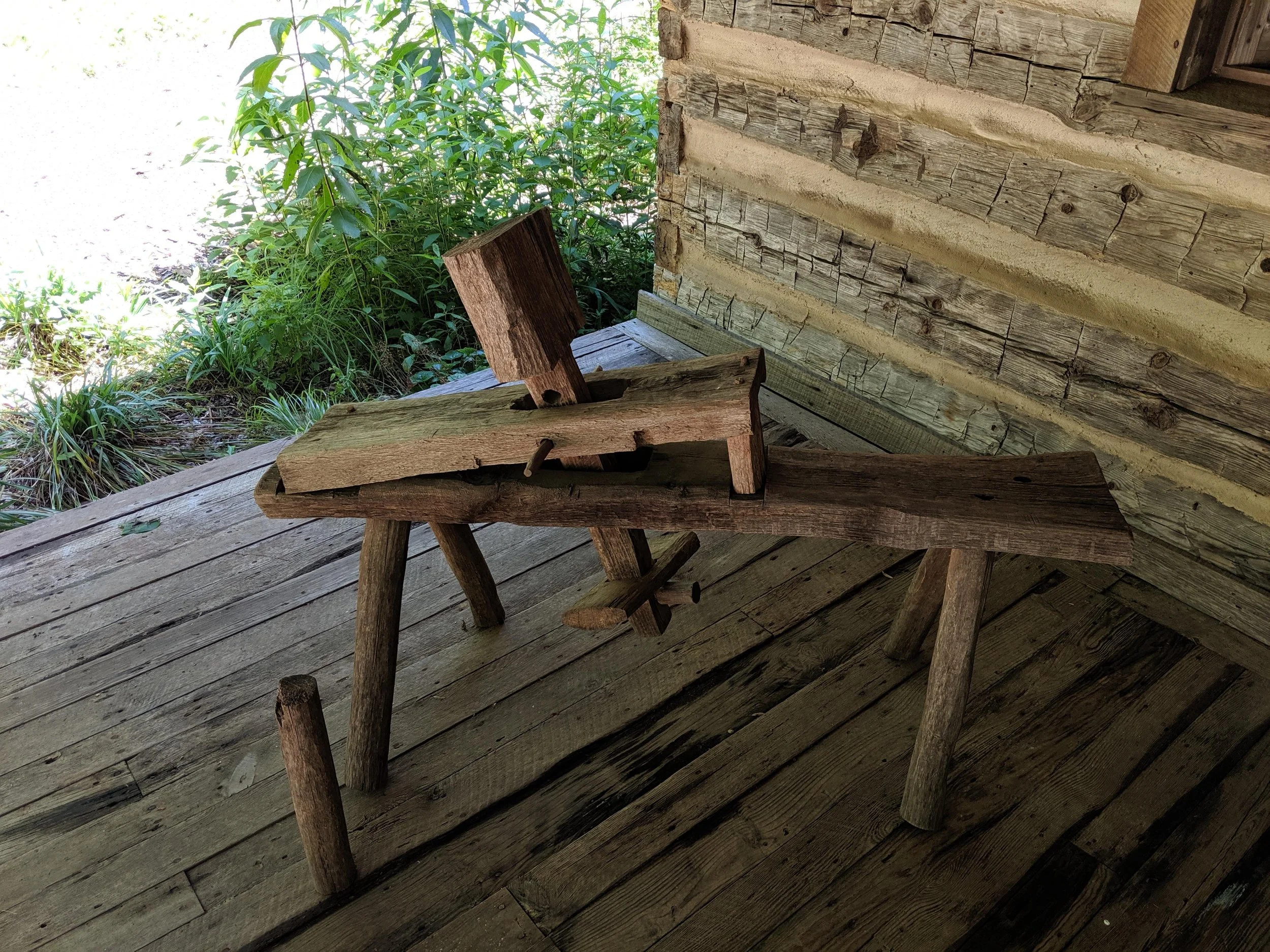
You’re probably asking, “Why should I care?” Preachers often place their focus on Jesus's three-year ministry of miraculous healing and convicted preaching. Then once a year we look at His birth. This is all well and good, except it can cause us to forget: Jesus, God of the Universe, had His diaper changed. The infinite God of the universe voluntarily lowered Himself to the level of a filthy human and stayed that way for 33 years. What about the thirty years between His birth and proselytizing? He ran around and played with the other kids in the neighborhood. He stubbed his toe, dropped things, and worked hard. The most fascinating part of all of this is: He chose this. His desire to save us was so great that He temporarily gave up equality with God to become one of us. He chose us. He also chose His time and His family.
[This is an excerpt from my book, The Blue-Collar Blindspot in it I dig deep into how Christian Media tacitly ignores blue-collar workers and the dignity of human work. I’ll be posting more each week till I’m through the whole book.]
Jesus - from eternity past - looked at all of the humans in the world and chose a first century Israelite carpenter to be His father. He knew that choosing His father would be choosing His profession, therefore Jesus chose to be a carpenter. What? The God of the universe came down and didn’t choose royalty, nobility, politicians, lawyers, merchants, businessmen, or even priests. He could've picked any occupation in the world - but chose to be a carpenter - to work with His hands to make His money.
Most scholars agree that Joseph passed away some time before Jesus started His ministry. As the oldest son, the responsibility of breadwinner fell to Him. Jesus chose to provide for His family with sweat and calluses.
According to oral tradition of the Talmud, a responsible father teaches his son a trade.1 Children become mentally and physically capable of helping with serious work around age ten or so. Starting His ministry around thirty, Jesus would have worked as a carpenter for nearly twenty years. The God of the universe spent twenty years just making stuff out of wood to provide for His family. Then, as His brothers became old enough to shoulder the burden themselves, He was likely the one who taught them the family trade. After nearly two decades of manual labor, Jesus began His ministry. A life spent working hard just to provide for a family, is being like Jesus.
God Himself wasn’t too proud to be a blue-collar worker. Modern society points to blue-collar workers and scornfully asks children, “Do you want to end up like them?” Why not? God was okay with being a mechanic or a plumber. In fact, He chose a similar path. Jesus spent two-thirds of His life on Earth working with His hands just to get by. If God approved of manual labor, why shouldn’t we?
Lastly, Jesus redeemed the τέκτων. Every time τέκτων appears in Isaiah, Jeremiah, and Hosea it references a woodworker who makes pagan idols. Leading up to - and during - the Babylonian exile, the primary employ of carpenters is idol makers. Way back in Genesis, God created mankind to work. In Exodus, God instructed Moses to build the Tabernacle and has τέκτων build His Ark. The Ark is made from wood and plated with gold. Then, when His people are at the height of disobedience and scattered abroad, the τέκτων spent much of their time making idols in the same way the Ark was built: wood plated with precious metal. Man corrupted the trade, and Christ redeemed it with twenty years of humble work. Christ spent time redeeming the trade that helped lead Israel astray.
This matters because Jesus chose to work this trade for twenty years. Doing skilled manual labor for little money is a noble, Christ-like life. Working hard to provide for a family is a Godly life, lived well. The occupation of a King. He was no unskilled laborer, nor a wealthy business owner. Just a skilled craftsman, whose work was known by all in His hometown. Jesus was a carpenter.2
[This is an excerpt from my book, The Blue-Collar Blindspot in it I dig deep into how Christian Media tacitly ignores blue-collar workers and the dignity of human work. I’ll be posting more each week till I’m through the whole book.]
If you’re interested in assessing your ministry or outreach, to know how blue-collar friendly it is, just pick up my free Ministry Assessment Tool it will allow you gauge what color your collar is and give tailored advice based on your score.
1Admur 156/2; 306/13; M”A 156/2; 306/13; Kiddushin 29a and 30b; Shabbos 150a; Koheles Raba 9/1; Sifra Emore Parsah 1; Mechilta Rebbe Yishmael Bo 18; Biur Halacha 306 “Ulilamdo”; Omitted from Rambam, Michaber, Rama
2Appendix A in my book is a consolidated list of all the references from each work.