Alistair Begg, Warning against Laziness - Sunday Sermon Review Episode 3
This week I review Alistair Begg adressing a body of College students about lazyness!
I'll update with the notes later today!

Let's Learn Stuff and Work Hard
This week I review Alistair Begg adressing a body of College students about lazyness!
I'll update with the notes later today!
Hello! This is the fist episode of Life Lesson Corner, my way of sharing some of the helpful things I've learned in life.
My apologetics ideology:
All work is a joint effort between God and man Ephesians 2:9-10
Acts 2:14ff &47 Peter preaches a sermon but “the Lord adds to the church”
Paul heavily uses debate as an evangelism strategy Acts 17:17-18
Paul doesn't always use this approach 1 Corinthians 2:3-6
There is a Time for everything
Know your enemy, know yourself Tsun tzu.
It is important to ask questions to guide their introspection.
You have to be genuinely curious and work to build the relationship.
Above all, LOVE them. John 13:35
I'm asking you to ask me about parenting, marriage, religious nuanced bible, leadership, and discipleship questions
Leave a comment here or Call in on Anchor
This is the show where I review a sermon! This week Pastor Bill Frasnelli preaches on God Held Captive to the Mission!
Pastor Bill Frasnelli at Jubilee Christian Center in Fairfax, VA
God Held Captive to the Mission
God held Captive Theme
Israel loses Ark to philistines (1 Samuel chapter 4 and 5)
God allows others to have power over Him
God chooses to act through human agents whenever possible
Joshua and Caleb had a different spirit
In sense of demeanor or manner
Caleb quieted the people Numbers 13:30
But Caleb quieted the people before Moses and said, “Let us go up at once and occupy it, for we are well able to overcome it.”
Challenge to cooperate Romans 10:12-15
We are a team/a body that functions together
Challenge to action Luke 14:23
Go out and DO!
Challenge to advance.
Make advancements for the kingdom
Challenge of Urgency Romans 13:12, John 4:35
Cooperate, act, and advance: NOW
Don't just "have" a mission statement, but your mission should make a statement.
Acts 10:38 *I am very sorry, I misspoke. This is Peter preaching to Cornelius' family, not Paul.*
- God is with you
Princess bride: We are men of action; lies do not become us. -Wesley
This sermon spoke to me in Anchor station and in Extreme church makeover
Consistently reminded of James 2
And Ephesians 2:9-10
What are some ways you can take action for Jesus this week? Call in and let me know
Also, if you’re thinking sermon you'd like me to review Please call and recommend one!
Thank you so much for listening;
I'm Robert Pearson
This is the weekly show where I recommend a book that is transformative, inspiring, or just fun! Today's book is Mother Teresa: Come Be My Light.
Mother Teresa: Come Be My Light By:Brian Kolodiejchuk
This book is:
The best Takeaways are:
Definitely check this book out and please let me know what you think!
This book is awesome! You're awesome! God speed!
Hello! This is the fist episode of Life Lesson Corner, my way of sharing some of the helpful things I've learned in life.
I am asking you to ask me about parenting, marriage, religious nuanced bible stuff, leadership, and discipleship questions. Ask questions via call in on Anchor or ask me on Twitter @lead2live
Two-fold Humility
Inward humility is what you think about yourself
Romans 12:3 Have an accurate assessment of your strengths and weaknesses.
Outward humility is what you think about other people.
Philippians 2:3, 4 Look out for the best interest of others.
What is not humility:
Hello! This is the first episode of Sunday Sermon Review on Follow the Leader Radio!
Scripture References: Genesis 49:16-18 Judges 5:17 Ezekiel 48:32 Numbers 10:25 Deuteronomy 27:13-15 Joshua 19:47 Judges 1:34 Judges 18 Revelation 21:12, 13
I apologize, I say Revelation 22 in the episode, it is actually chapter 21.

When I was in Bible college, I volunteered in a homeless ministry. We walked the “mean” streets of Columbia, Missouri and just built relationships with the career homeless. The most dynamic one was a guy who we only knew as, “Preacher Gary.” He was a little eccentric and had more than a few strange ideas about Christianity. However, some of his ideas are surprisingly insightful, here’s one of them:
Preacher Gary always wore an all black dress shirt, black slacks and shoes. He was never seen without a black cowboy hat with “Jesus is Lord.” written in large, white letters. It was adorned with a small, metal crucifix (https://en.wikipedia.org/wiki/Crucifix) on the front.
His plain, yet distinctive fashion choice was precisely designed to show every onlooker, exactly what he was. Preacher Gary wanted everyone to know that Jesus is Lord, and that he takes his faith seriously. Now, if you ever asked why he dressed that way, he would begin in Genesis.
In Genesis 3:9-11 we have the account of Adam, hiding from God. Adam and Eve have just eaten the forbidden fruit, shamefully made clothes from the bushes, and leapt into said bushes when they heard God coming. At God’s approach, their reaction was to hide.
Preacher Gary would then take you to Exodus 28:33-35, where God is explaining how He wants the High Priest’s clothes made. God requires that the robe the High Priest wears will have alternating little, gold bells and pomegranate seeds all the way around the hem. The specific goal was so that the High Priest would jingle, everywhere he went.
Adam hid, God want’s his High Priest to be visible. Dressed in priestly garb of Gold and bright blue with bells and pomegranates around the hem. He’s an eyesore that jingles everywhere he goes. Hiding is impossible.
God doesn’t like it when you try to hide from him. He can see you anyway and you look ridiculous. He loves when you stand before him unashamed, trusting in his forgiveness. God purposefully designed the Priestly robes to make hiding from him feel more impossible and ridiculous than it already was.
Brought to the New Testament, God wants you to want to be seen by the world. In Matthew 5:14-16 Jesus says that you are a city on a hill, a bright light to be shared with all. Preacher Gary took this to heart, and made himself a uniform for being a Christian.
His reasoning was that the world should know you’re a Christian, just by looking at you. Jesus shouldn’t have to look for you when He returns. You should be immediately visible as a Christian. Looking at you, are you a Christian? How would anyone know?
Now, obviously you don’t need to dress funny to be a good Christian. The lesson here though, it to not be embarrassed of the old “Got Jesus” t-shirt in your closet. Maybe don’t wear clothes that have vulgarities on them. Moreover, we must show others our faith by our ACTIONS.
How we live and how we treat other humans determine how we are “dressed” before God and the world. We must be clothed with Christ. We must use our ACTIONS to showcase our faith.
Shame hid us from God and his renewed relationship with us calls us to be seen by all. A city on a hill, a beacon to the nations. Make your Christianity conspicuous and unmistakable. When the Lord returns, he shouldn't have to look for you.

Jesus is a controversial figure. He is usually seen as doling out restrictions and prohibitions. Take the time to read his teachings carefully. He gives more do’s than don’ts and if you spend your time doing the do’s, you won’t have time to do the don’ts (I stole this from Mike Warnke, it’s just too good).
Jesus tells this story about a guy who is in charge of his master’s house and is about to get fired. His position is much like the president of a company who answers to the owner. He is getting fired for mismanaging the master’s finances.
This is a problem for the guy because he figures that he’s too old and soft to go out and do manual labor for his money. He’s also too prideful to take up begging. So the way he figures it he needs to make connections and fast. He starts going through his bosses rolodex and finds everyone that owes his master money. He gets these guys together and starts wheeling and dealing FAST.
He adjusts the amount owed on the debts, reducing the debt by 50% and 80%. As a servant managing the household, any deals he makes on behalf of his master are binding. He’s not changing the ledger, but renegotiating the deal to cut these guys a break. This allows the Servant to ingratiate himself to the debtors.
He’s already burned his bridge with his current master so he’s not really that concerned about what the master thinks of his methods. He is hustling to make connections. The result is when he’s put out on the street, he has connections that remember him fondly.
The master praises the servant for being shrewd. Not for ripping him off, but for being clever. Jesus uses this as a teaching point, saying, “the children of this world are more shrewd in dealing with the world around them than are the children of the light.” The point is it’s okay to be a Christian and use worldly wisdom. You should use the strategies, resources, and time you have RIGHT NOW to build relationships.
As the saying goes: you can’t take it with you. As a Christian, the one thing you can take with you is people. Relationships change and grow with time. They require work and effort to cultivate them. But that doesn’t mean you shouldn’t plant as many as you can.
There it is. Jesus says you should network for the kingdom. Making friends that could last an eternity. The master praises the wisdom shown by the Servant in using his position to build relationships.
So when you notice it’s the same cashier you got last time: look them in the eye, learn their name, and learn one new thing about them. Use the place you’re at in life to plant as many relationships as you can. Learn something, share something, and connect.
I challenge you to meet someone new this week! Tell me how it goes.
Also, subscribe to my email list and I'll send you a unicorn! There may be some articles too!

Seriously, get off of the couch.
So much of modern Christianity talks endlessly about loving Jesus, but so often tragically misses the mark. Sure they profess that love is a verb, and love is more than an emotion. They often wax theological about ἀγάπη love and the golden rule, but miss one crucial step.
That step is best expressed as: So what? What are you going to do about it? How are you going to change your actions? What practical ways will your life change to match the love of God?
Jesus goes to great lengths to model unconditional love to his followers, and speaks extensively on limitless forgiveness and humble kindness. The critical element in all of this is: He models it. Jesus actually goes and does it; His actions express the love He has. After He walks the walk, only then does he talk about the lofty ideas.
Action is the key, all the good preaching and solid theology in the world is completely pointless without accompanying actions. Love is a pretty abstract concept, and it becomes even more abstract when you try to love someone you can’t see. What we need is a way to move from abstract concept to solid course of action in our tangible reality.
I am a firm believer in the power of the one sentence definition. If you can boil down an abstract concept to a single, concise sentence then you understand it well enough to act on it. This empowers you to almost effortlessly turn ideas into actions.
I get my one sentence definitions from compiling all the relevant scriptures on a topic. I then look for all the recurring ideas or phrases and boil them down into a single, logical sentence. My definition of Love is: a course of action based on what is best for another person.
This is powerful! I can now look at a situation, choose to love someone, and then know exactly how to act on that choice. I choose to do what is “best” for the other person, when I choose to love them. Here, best doesn’t just mean, “what they want,” but rather what allows the most personal growth and safety.
So the question is how can we show love for God? There are two verses that make this a simple answer, Matthew 25:40 and 1John 4:20. The first has Jesus saying that, “as you did it to one of the least of these my brothers, you did it to me.” The second says that if you don’t love your brother, you CAN’T love God.
The way you experience, and show your love for God, is by showing the love of God to others. You show this love by taking the course of action in every situation that encourages the other person to grow. You have to follow the Master’s example and show love to everyone, only then can you truly love God.
You can no longer just sit in church and merely say that you love Jesus. You must help your coworker move so you can show the love of Christ. You need to volunteer in your community in literally any way. You can not say that you love Jesus if you rest upon your laurels and do nothing.
How will you show love to Christ tomorrow?
I wish to express my undying gratitude for your focus and attention: THANKS COOL PERSON!
I have more of these cool things on my blog at lead2.live You’re awesome, and you matter a lot.
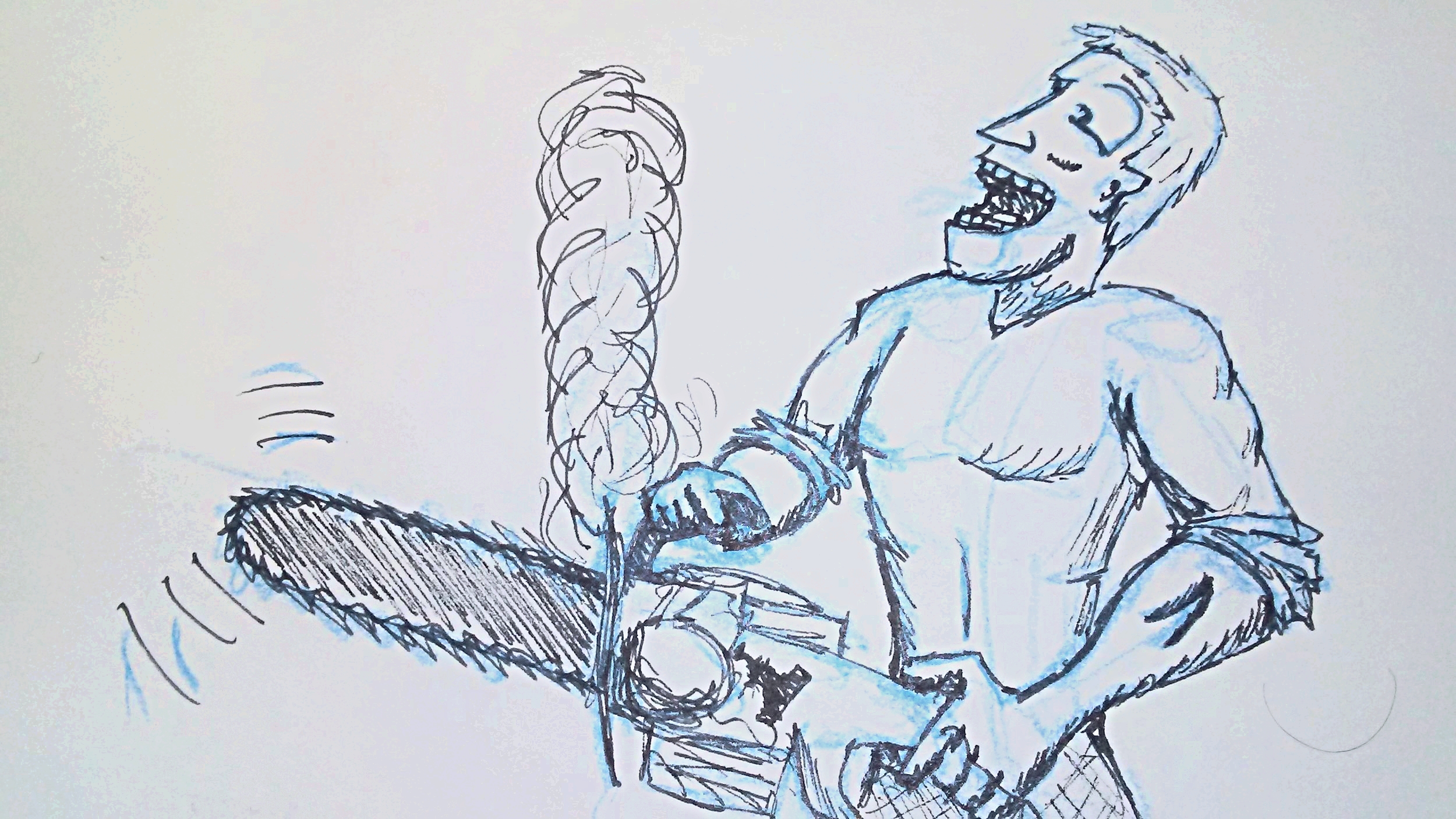
I think we can all agree that distractions are generally a bad thing. They waste your time. They squander your energy. They exsanguinate your potential.
The worst part of it is, distractions are so easy to fall into and quite difficult to spot. In our increasingly digital world, they can be very hard to escape. This is why it’s important to employ a scorched earth policy when dealing with them.
Pruning is an agricultural technique that I am going to grossly oversimplify so I can make a point! Put very simply, pruning is where you take a fruit-bearing tree and cut off every branch that is dead, or even just doesn’t bear fruit. Sometimes it’s even a healthy branch that you just don’t want to grow fruit because it’s too short, or could harm the tree as it gets bigger.
The priorities for an apple farmer are: make apples, make bigger apples, and make more apples. So only the limbs with apples are important. The limbs are also cut in a pattern that makes it easier to collect the apples that grow. So the lesson is: know what’s important!
This means that anything that doesn’t contribute to the goal is pruned. Every single branch outside the plan is treated as expendable, if not detrimental. When you prune a branch it is cut off flush with the tree’s trunk so it doesn’t grow back. The lesson is: mercilessly remove distractions completely!
Lastly, trees grow very slowly; veeeeeery, veeeeeery sloooooowly. Pruning a tree properly starts early and takes years. This is not an overnight process and patience is a fundamental element of it. The last lesson is: be patient and stay committed for the long haul.
I hope this was both inspiring and empowering. I was going for inspiring and empowering. I want you to use this next week to try and identify 1 time wasting habit you could do without. Think of 3 ways you could cut this time-waster out of your life and do 1 of them.
What’s your worst distraction and how will you prune it? Tell me in the comments!

When I was in Bible college, I volunteered in a homeless ministry. We walked the “mean” streets of Columbia, Missouri and just built relationships with career homeless. The most dynamic one was a guy who we only knew as, “Preacher Gary.” He was a little eccentric and had more than a few strange ideas about Christianity. Some of his ideas are surprisingly insightful, here’s one of them:
God wants Christians to tithe. The Old Testament required a tithe of money, cattle, and crops. And in the New Testament Jesus says that the Pharisees should have tithed even herbs from their garden. As Christians, we should go above and beyond the bare minimum and tithe on everything! So 1/10 of your time looks like 2 hours and 24 minutes, or 1 hour and 36 minutes if you only count hours you’re awake. Do you spend an hour and a half or more reading your Bible or praying every day? How much time do you spend watching television?
While his position is a little extreme there is a Biblical basis for … some of it. In 1 Corinthians 16:2 Paul calls the church to collect an offering for saints in Jerusalem by: On the first day of every week, each of you is to put something aside and store it up, as he may prosper, so that there will be no collecting when I come. Paul expects consistent, purposeful giving from a body of believers.
Later, in 2 Corinthians 9:6-7 Paul refers back to this gift: The point is this: whoever sows sparingly will also reap sparingly, and whoever sows bountifully will also reap bountifully. Each one must give as he has decided in his heart, not reluctantly or under compulsion, for God loves a cheerful giver. So the Christian is expected to be selflessly generous.
Lastly, in Ephesians 5:15-16 Paul talks about living life to it’s fullest: Look carefully then how you walk, not as unwise but as wise, making the best use of the time, because the days are evil. “Best use of the time,” in Greek is literally, “redeeming the time.” Your time is not your own, your every minute was bought with a price (1Cor 6:19).
Now let’s temper this with some common sense. Following Christ never requires legalistic rule following and a tithe is no exception. Christians are expected to give cheerfully. It would be wisest to have a consistent, sustainable method of giving. Giving is not simply limited to giving money to your church. Or in the case of time, reading your Bible and praying. You could sponsor a child through a charity, help a friend buy groceries when things are tight, volunteer at a soup kitchen, teach a Bible study. Any one of those would be great ways to give to God, what is God’s.
In light of this, check your schedule and make sure you’re using your time well, was bought with a price.
I’m going to try to convince you that you need to start praying, after you eat. Now hold on, I know that praying before the meal has a long and established tradition in Christianity stretching back to Jesus himself. I’m just suggesting that you consider another way.
The New Testament example is one of praying before the meal: Jesus gives thanks before the multiplying the loaves and fishes, before breaking bread at the last supper, and when He eats with His disciples at Emmaus. The apostle Paul also gives thanks for his food before he eats. It’s an important spiritual discipline that encourages a life of gratitude.
I found this verse a little while ago and thought it sounded like an interesting direction to go. Little did I know it has proven the hardest thing I’ve attempted in my life. So I’m reading Deuteronomy and I come across this:
And when the LORD your God brings you into the land that he swore to your fathers, to Abraham, to Isaac, and to Jacob, to give you—with great and good cities that you did not build, and houses full of all good things that you did not fill, and cisterns that you did not dig, and vineyards and olive trees that you did not plant—and when you eat and are full, then take care lest you forget the LORD, who brought you out of the land of Egypt, out of the house of slavery.
Deuteronomy 6:10-12
Then, just two chapters later it says:
And you shall eat and be full, and you shall bless the LORD your God for the good land he has given you.
Deuteronomy 8:10
Moses flat out says, you need to remember to thank God after you’ve eaten and are full. So I said, “Yeah, no problem. I’ll start praying after I eat.” Boy, was I wrong. A surprising thing happens when you get done eating, talking, and laughing … you forget. In 5 years of trying to do this, I’ve remembered twice. Only twice have I gotten all the way through a meal, put my plate a way, then sat down and prayed. It is mind blowing how easy it is to forget to thank God, once you’re full, comfortable, and looking for desert.
It seems so strange that the hardest time to thank God is the one that should be the easiest. So I issue this challenge to you: After each meal you eat this week, stop when your done, turn your heart to heaven, and give thanks.
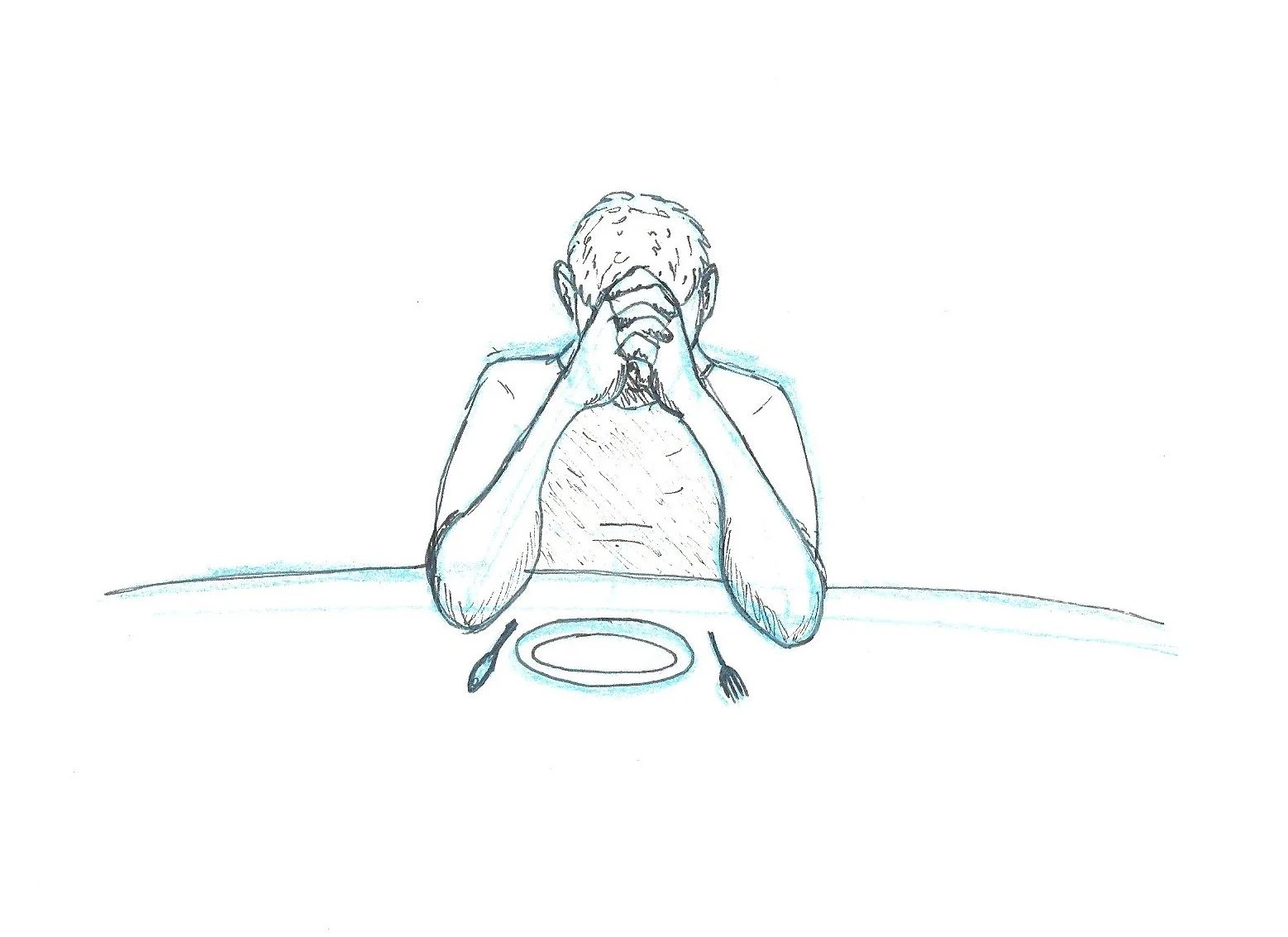

I’ve been studying martial arts since I could walk, and one of the most important principles, regardless of your style, is this: if you’re just trying to not get hit, you’ll lose every time. You have to be focused on winning the fight. Conquering distractions works in much the same way.
Let’s learn from Martha. In Luke chapter 10 we see Martha being a good host to Jesus. She's making food, she's washing dishes; she is on the ball. SO much so that she loses sight of why she’s doing it all. Instead of focusing on the joy of serving others, she got distracted. She started thinking about who wasn’t helping, how much she did around there, how good she was. Martha began to exhibit the classic symptoms of distraction: impatient, indignant, self-righteous, and most of all … Angry with Jesus.
That’s right, we can get angry with the savior himself, and for no good reason. All because we got distracted from what’s important and delude ourselves into thinking whatever is wasting our time, is important. This sounds a lot like the prodigal son to me!
No, not that one, not the one that left, squandered his money on loose living, and came crawling back. The son who really gets lost in that parable is the one who stays home. He lost sight of the importance of his brother and was distracted by his own meager inconveniences. He then was indignant with his brother’s treatment, self-righteously defended his own actions, and was very angry with his father!
Distractions can make us mad a God for no good reason. However, the best news is that this condition, though it can be terminal, is easily treatable! We see a very different Martha presented in John 11, when Jesus arrives shortly after the death of Lazarus. Martha runs to meet Jesus even before the enters the town. She immediately greets him and expresses faith in his ability to heal. Then casually throws around the doctrine of resurrection. This is a hotly debated topic of the day which not all scholars agree on and this woman (with no formal education) nonchalantly references it as an assumed fact! Then Jesus says he’ll raise Lazarus and she just says, “Okay.” Then makes the great confession! She was paying attention, she was listening, she was learning from what the master taught. Distractions aren’t permanent.
It’s easy to say paying attention means keeping your eyes on Jesus. Just focus on Jesus, keep Christ at the forefront of your mind. That’s easy to say, but what does it mean? I propose the solution is simple. Here’s the short version: Jesus = Other people. Stay focused on serving others and choosing what’s best for them, and recognize distractions when they come up. I’ll unpack why Jesus = Other people in the next one. God speed!
Sound off in the comments! What's your greatest distraction?
Don't forget about the Man Cards project! It's still not too late to support the coolest deck of cards in the world! Please also share this link! https://igg.me/at/mancards/x/16023848
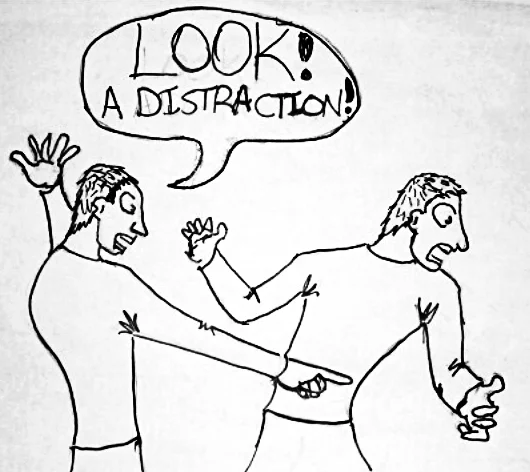
We live in a world of distractions. Your phone is one stop shopping for distractions. Scores for the game, actual games, the internet, and even other people. Normally this isn’t a big deal, but distractions can be very dangerous because they render the most powerful man helpless.
The word distract comes from the Latin dis meaning “away” and trahere meaning “draw.” Distraction being something that draws you away from what's important. In the Bible the word only appears twice. The Greek word is περισπάω, περι the preposition for “around” and σπάω which means “draw” It's used for when peter draws his sword to cut that guy's ear off.
You get the idea though, when your attention is drawn away from what’s important you’re left vulnerable. The city of Ai learned this the hard way. When Joshua lead the Israelites to take Ai in Joshua, chapter 8, distraction was the tactic that God chose for them to use. The Israelites split off a small force that approached the city in the open and then ran away. The people of Ai were so incensed that they immediately sent out their entire army to chase after this small force that simply approached the city and left. When they did this they left the city defenseless. The just remainder of the Israelite army moved into the city, set it on fire and headed out to surround the army of Ai. The city of Ai was destroyed so completely that scholars still don’t know for sure where it was. Which is crazy because archaeologists have been able to find most ancient cities, even ones that were destroyed completely.
The army of Ai lost sight of what was important. The job of an army is to protect their country, or in this case, city. Ai lost sight of that and instead of protecting the city, they ran out to go attack some “punks who were back for more.” They got distracted and were drawn out to where they would be vulnerable. Even a powerful, experienced fighter can be easily knocked out if the allow themselves to get distracted.
In life it’s hard to tell if you’re losing the fight because the knockout’s don’t come all at once. It’s slow and it’s subtle; each little distraction leads to a little loss. Those losses build up over time until it’s overwhelming how often you check your phone, or how much time you spend on Facebook or surfing YouTube. Before you know it your focus is stolen from your family, your church, your life.
In Mark 4:18-19 Jesus explains the parable of the sower, where the seeds fell among the thorns. Jesus says that the thorns represent the worries of the world which choke out the seeds and make them unfruitful. As Christians that’s our job, to bear fruit for Jesus. Getting your head full of these other things can wither your fruit. It steals nutrients (precious time, focus, and energy) from growing fruit and wastes it. Stay focused and stay fruitful.
This is IT! The project launches today and we only have 30 days to make the goal. Please, support Man Cards in any way you can and tell everyone! GO HERE to fund this awesome thing!
I was reading through Nehemiah 1 recently and was struck by how Nehemiah mourned the loss of Jerusalem's walls and the scattering of her people. You see, walls are vital to ancient cities. They were your first and best line of defense against invading forces.
If you didn't have walls you essentially didn't have a city. This is because basically any army could just roll into town, set up shop, and take over without a fight. The walls around an Ancient city structure and security from outsiders, defines the borders, and creates a safe place within it's walls.
Taking this concept to the home, your leadership is the wall protecting the spirit of your family. Your leadership protects your family from negative outside influences, defines the boundaries of what is acceptable and creates a place where it is safe to relax and be at ease. Build your wall, lead your family.
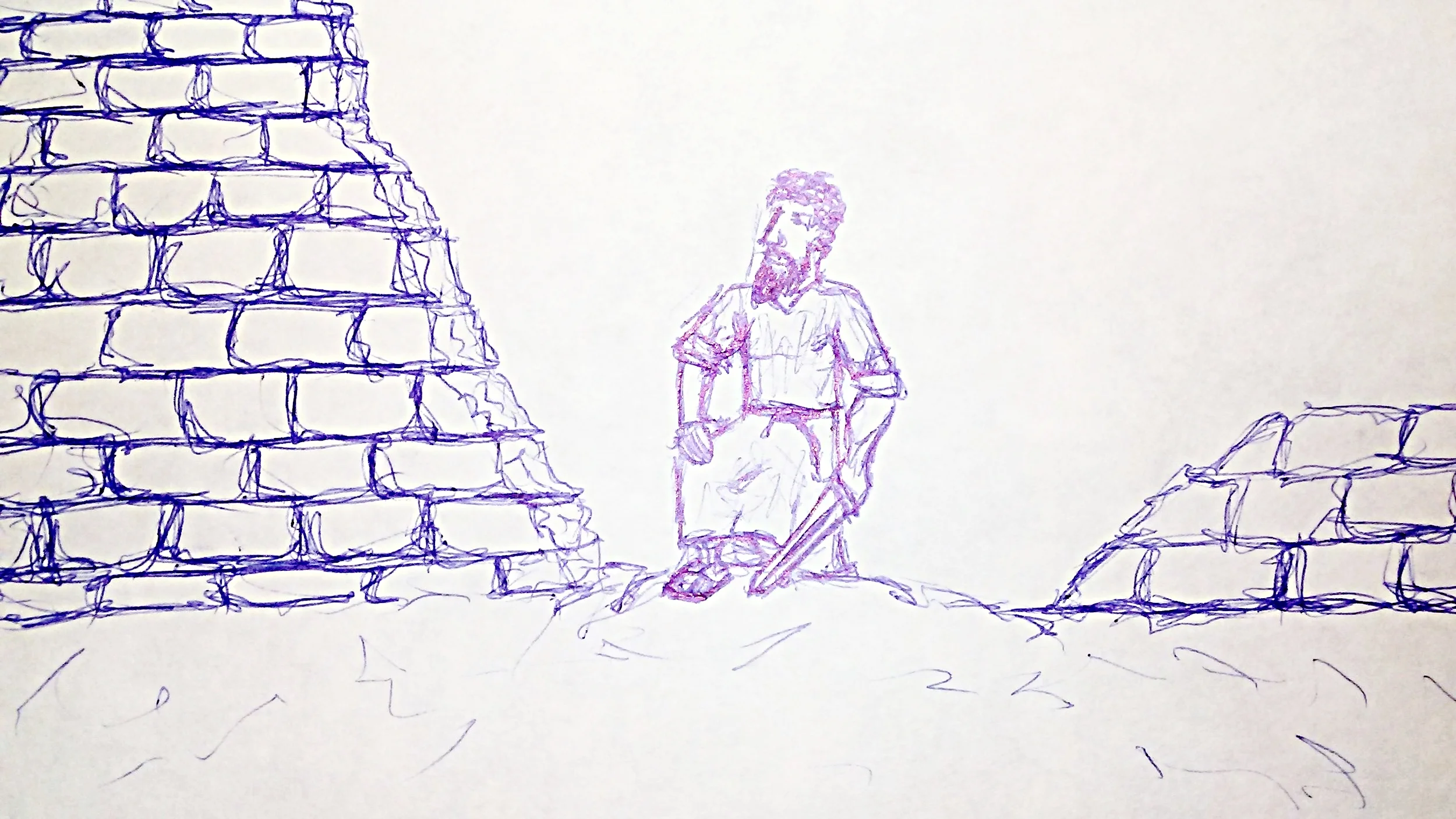
Take a minute and read, Psalm 25:4-14. It's okay, I'll wait......
Almost every other verse says that God will teach you. My mom always says, "If it's in the Bible more than two times, it must be really important." Now, I don't claim to know all the ways God teaches us and how all of that works. I do know this one, little way.
"Before anything else and above everything else, humans are relational creatures."
-John Fuller
God created us to be in relationships with each other. It's through those relationships that we can learn about our relationship with him. Throughout your life there will be moments when a verse or situation from scripture comes to mind at a critical moment in your life when your circumstances directly parallel the scripture. Those are the moments to look for and learn from.
My oldest son was only a day old and I'm changing what was probably my fifth diaper. I'm an expert at this point and still can't figure out how to properly wrestle with a kicking newborn. They have a way of pulling their heels to their butt, get poop on them, then kick out and spread poop everywhere. He keeps kicking and all I can think to say to him is, "BE STILL!" and my brain finishes, "and know that I am God." When we struggle, sometimes we just get poop everywhere and we make it more difficult for God to help us. It's when we relax and let God lead that the best things happen.
That's my favorite learning anecdote, what's a time in your life when God taught you something through life?

So, my wife and I were at our local hardware store the other night when the sales associate, an older man named John, came over to see if we were "finding everything okay?" I was busy agonizing over which drill bit to buy when she strikes up a conversation with him.
Now, my wife, Ebony, has always had this God given ability to open up complete strangers. She tells him that we've been married for 8 years and he kind of chuckles to himself, as if to say, "That's nothing." I know this because it's the same chuckle I get when someone proudly says they've been married for 6 months, or even a year.
Well, now we're curious. My wife then asks the obvious question, how long have you been married? John gets this blank look on his face while he does the math. Slowly and deliberately he says, "43 years." That's awesome, and my wife and I are quick to tell him so. That's such a long time to be married. It's less and less common for marriages to last that long these days. Here's the most interesting part: when Ebony asks about John's wife and what she's like, he gets silent and just looks.
He had no words. He had been married so long and loved her so much, he didn't have words to describe it. She was just his wife, that's all he could articulate. He then went on to explain that he couldn't even explain how or why they got married. "We just fit," John said, "We just seemed to go together and it felt right." I can only hope right now that one day I might experience a love for my wife so profound it very literally defies explanation.
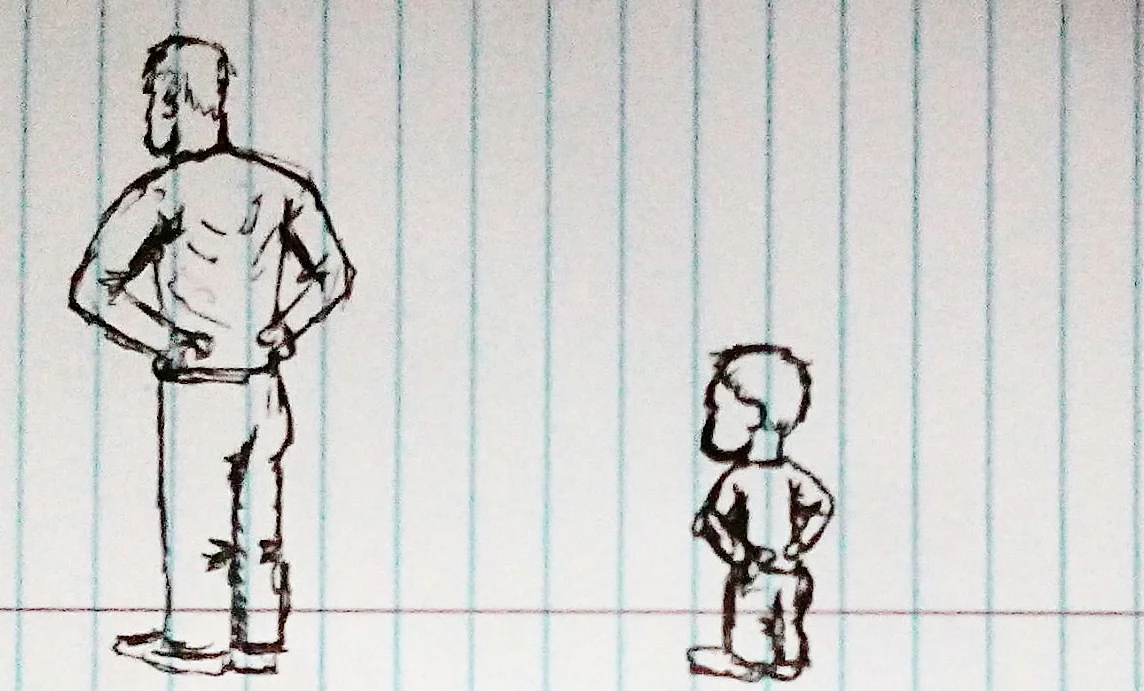
I wrote this for a Father's day contest at my Church.
Psalm 127 is possibly the greatest passage about family in the Bible. It cuts right to the heart of a successful life, and a successful family. "Unless the Lord builds the house, those who build it labor in vain." Which is to say that if God is building the house, those who build it need only calmly continue to work and God will make progress happen.
In Japan the way they teach children to play the violin at age 5 is to teach the mother violin in front of them starting at age 3. On page 29 of Men of Integrity July/August 2016 There is a devotional about praying with your family as a way of modeling Godly behavior and establishing His authority over your household. I feel that the author didn't use the best verses he could have, and falls short of explaining how powerful modeling really is (I know these are really excerpts from books and not originally written as standalone devotions).
Modeling is so powerful it could be successfully used as your only parenting strategy. Deuteronomy 6:9 speaks of God's commandments, "You shall teach them diligently to your children, and shall talk of them when you sit in your house, and when you walk by the way, and when you lie down, and when you rise." Teach with your life, all day every day. This is so important that God repeats himself in 11:19. When you sit, when you walk, when you lay down, and when you rise. Teach by living.
I learned the heart of modeling in my first year of marriage while my wife was pregnant with our firstborn son. I'll start by describing what my dad was like when I was ages 5-7. He had a beard, long hair, wore a bandanna to hold his hair back while he worked, he worked third shift, and had a wretched short temper. I was married in the Spring of '08. By that summer I had grown a pony tail, grown out my beard, was working third shift at a factory, started wearing bandanna's to hold my hair out of my face and struggling with a lifelong short temper. I stopped one day and realized how effortlessly and unintentionally I became my father. It dawned on me that the man I am, is the man my son will most easily become. The man my daughters will be drawn to, for better or worse.
I could use this, learn to overcome my temper so I could help my son overcome his. The easiest and the hardest way to parent is this: Be the man you want your son to be, be the man you want your daughter to marry. God will work everything else out.